









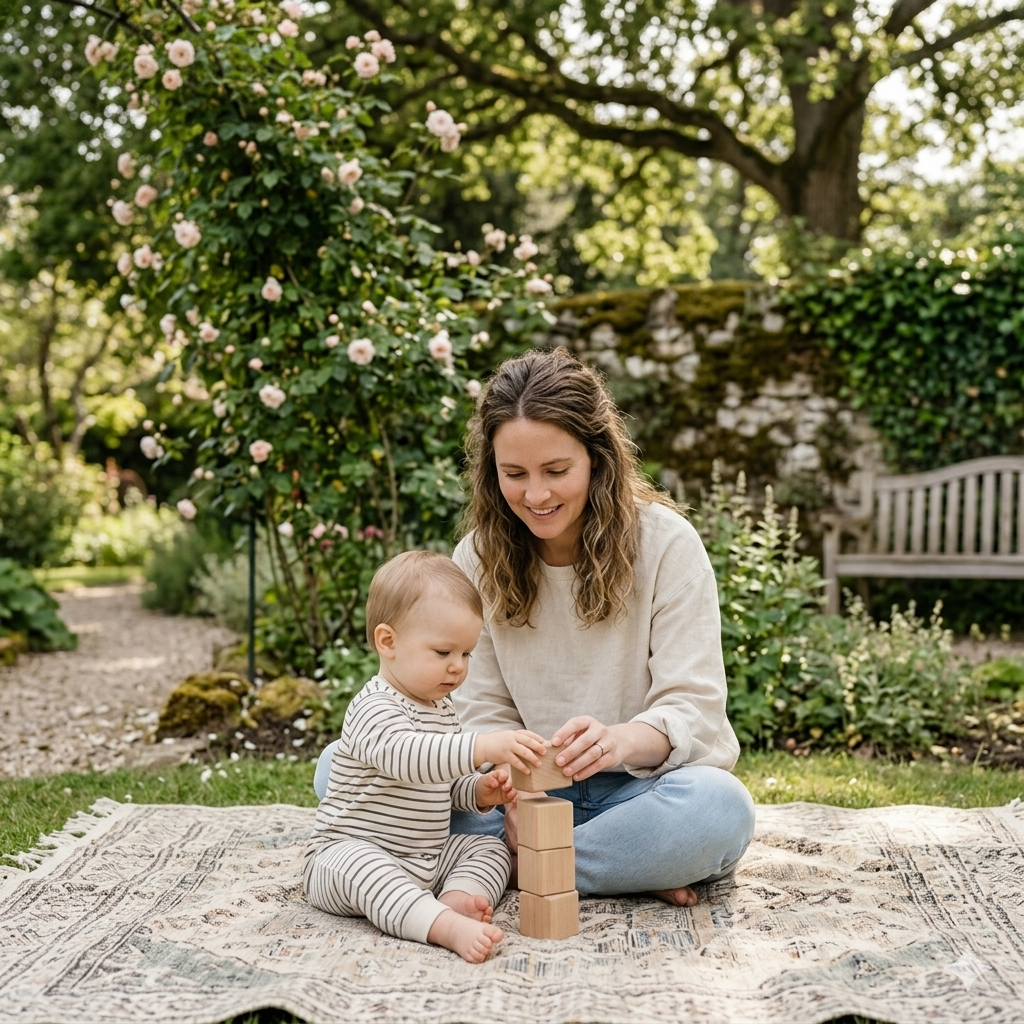
Slow Parenting: Rediscovering the Rhythm of Childhood to Grow Better
16 December 2024In a society where performance, time optimization, and urgency seem to dictate our schedules, a new educational trend is finding its way into our homes: Slow Parenting. Far from being a rigid method, it is more of a philosophy of life. It invites us to switch off autopilot and give meaning and depth back to the time spent with our children.
What is Slow Parenting?
Slow Parenting is the art of prioritizing quality over quantity. It is about accepting that a child’s schedule is not the same as an adult’s. For a toddler, the world is a source of permanent wonder: watching a line of ants on the sidewalk or seeing raindrops slide down a windowpane are activities just as enriching as any structured early-learning class.
Slowing down does not mean "doing nothing." It means giving the child the necessary space to explore their environment at their own pace, without the pressure of a result or the next appointment.
The 4 Pillars of Slowing Down Daily
To integrate this philosophy into an often-busy family life, we can rely on four major axes:
1. Authentic Presence ("Deep Parenting")
Presence is not measured in hours, but in intensity. Slow Parenting encourages moments of total connection.
♦ The Tip: Put your smartphone in another room for 20 minutes. Be fully available through your gaze, listening, and touch. This quarter-hour of "pure" presence nurtures the child's emotional reservoir far more than two hours of distracted presence caused by screens or household chores.
2. In Praise of Boredom and Free Play
Out of fear of "poorly preparing" their children's future, many parents over-stimulate them with programmed activities. However, boredom is the breeding ground for creativity.
♦ The Tip: Do not try to fill every void. A bored child eventually mobilizes their own cognitive resources to invent a world, transform a cardboard box into a spaceship, or simply dream. This is how they develop autonomy and self-confidence.
3. Respecting Biological and Sensory Rhythms
A child lives in the present moment. Imposing a frantic pace (abrupt wake-ups, rushed commutes, hurried meals) creates chronic stress that harms development.
♦ The Tip: Whenever possible, anticipate departures to avoid saying "hurry up." Let them finish their gesture, even if it takes them three times longer than you to put on their shoes. This is a crucial step for their motor skills and their sense of self-efficacy.
4. Returning to Simplicity
We often forget that the most memorable childhood memories are rarely linked to expensive objects or extraordinary trips.
♦ The Tip: Rediscover simple pleasures. Cooking pancake batter together, taking a forest walk with no specific goal, or reading a story without skipping pages because you’re in a hurry to end the day.
Why is This Beneficial for the Whole Family?
For the Child: They grow up in a climate of emotional security. Being less constantly stimulated by external triggers allows the nervous system to calm down. They develop better concentration skills and a richer imagination.
For the Parent: It is a powerful remedy against parental burnout. By lowering expectations and stopping the race for "educational perfection," the parent reduces their own mental load. We no longer try to be a perfect parent who does everything, but a present parent who enjoys the moment.
Conclusion: Giving Yourself Permission to Breathe
Slow Parenting is not another obligation. There will always be difficult mornings and unforeseen events. The idea is simply to allow yourself, from time to time, to slow down. It is a gift you give to yourself and your children: the gift of savoring childhood while it’s here, because it, too, passes far too quickly.
 Back to news